Thursday, July 23, 2015

The Mulligan Concept

Access Physical Therapy and Wellness Center would like to congratulate Dr. Jonathan Hunziker on receiving his certification in The Mulligan Concept of Physical Therapy. Receiving this certification makes Dr. Hunziker the only physical therapist certified in the Mulligan Concept in Orange County, NY.
The Mulligan Concept was developed by Dr. Brian Mulligan of New Zealand. It requires both the patient and physical therapist to work together to alleviate the patient’s pain and increase their movement almost immediately. The Mulligan Concept requires the physical therapist to reposition the bone, muscle or joint that is causing pain while the patient moves the same body part simultaneously. For the most part, the Mulligan Concept is used for people with lower back pain, neck pain, tennis elbow, and impingement syndrome.
There are 4 main techniques that are used in the Mulligan Concept
  • SNAGs
  • NAGs
  • Peripheral MWM
  • SMWLMs
SNAGs stands for Sustained Natural Apophyseal Glides. SNAGs is typically used when treating pain in spinal joints, rib cages and the sacroiliac joint. NAGs stands for Natural Apophyseal Glides. NAGs will be used for injuries to the cervical and upper thoracic spine. Peripheral MWM stands for Peripheral Mobilisations with Movement. Peripheral MWM is used to help improve movement and functioning  in peripheral joints or extremity joints. SMWLMs stands for Spinal Mobilization with Limb Movements. SMWLMs will be used for pain and movement in the joints of lower extremities.
Therapists that are certified in the Mulligan Concept go through extensive training. They sit in on multiple seminars, and also complete multiple written and physical performance tests. This concept has resulted in both the immediate pain relief and improved functioning of joints in many patients when the concept is done correctly.
Access Physical Therapy and Wellness now offers the Mulligan Concept with Dr. Hunziker for the treatment of joint pain that may develop from sports injuries, work accidents, and back/neck pain.
- See more at: http://accessptw.com/blog/The-Mulligan-Concept~1481.html#sthash.wOkdUxp4.dpuf

Thursday, July 16, 2015

Port Jervis Location

Are you in need of good physical therapy? Do you live in the Downstate and Hudson Valley area and can’t find a practice that will meet your personal and individual needs? Look no further as Access Physical Therapy and Wellness has many convenient locations throughout the Rockland, Westchester, Pike, Orange, Sullivan, and Ulster Counties. Access Physical Therapy & Wellness is a family-owned organization that provides their patients with the best Physical, Occupational, and Speech therapy services at 18 locations in five states. Founded nearly 11 years ago by Physical Therapists, Orange County natives, and brothers Stephen and Christopher Albanese and their wives Shannon and Janet. Access Physical Therapy and Wellness has twice been recognized as one of the Best Companies to Work for in New York by the New York State Society for Human Resource Management and Best Companies Group.

One of our Access Physical Therapy and Wellness practices, is located at Port Jervis in Orange County and is directed by Dr. Kristin Banse. With over 23 years of experience, Dr. Kristin Banse has concentrated in the field of orthopedic/sports medicine physical therapy for the past 15 years. She graduated from Ithaca College in 1991 with a bachelor’s degree in Physical Therapy. Dr. Banse holds certification as a Certified Strength and Conditioning Specialist through the National Strength and Conditioning Association and is also LSVT BIG certified. In addition, she is a certified APTA clinical instructor and holds a dual license in New York and Pennsylvania.

Serving Orange County for many years, Ellen Knapp-Hayden is another member of the team at Access Physical Therapy and Wellness in Port Jervis. After being a registered nurse for over 20 years, she decided to pursue a second career as a Physical Therapist Assistant and graduated from the SUNY Orange program in 2003. Ellen is also certified as as Senior Exercise Specialist, LSVT BIG, and APTA clinical instructor.

At Port Jervis, Dr. Banse and her staff of physical therapists will work diligently to ensure a speedy recovery and good health while also providing a great overall experience. Their goal is for every patient to complete their therapy with relief of their symptoms, an understanding about their condition, tips to stay healthy, and an improved quality of life.

We feel like we have the best physical therapists around. Did you know you don't need a referral to get help from a Physical Therapist? Direct access is available for you, please call us and set up an evaluation so we can help get you back on your feet. In Orange County we offer Physical Therapy in Chester, Goshen, Monroe, Port Jervis, and Montogmery. Westchester County has Physical Therapy in Armonk, Bedford, and Hawthorne. In Ulster County we offer Physical Therapy in Wallkill, while in Sullivan County you can get Physical Therapy in Ferndale. To round out our 12 locations in New York, those living in Rockland County can go to Physical Therapy in New City as well as Pomona. If you happen to live in PA, we also have Physical Therapy in Milford and Dingmans Ferry of Pike County. Give us a call today!


How Can Occupational Therapy Help People Recover After a Stroke


It is estimated that 5.4 million people are living with the effects of a stroke, the number one cause for adult disabilities. Those who experience a stroke should follow the path of recovery through Occupational Therapists who specialize in helping these people. Occupational Therapists will make the post rehabilitation effective and fit the needs for that specific individual. They do this by helping build endurance and strength and giving household equipment for daily exercises. Their main goal is to have the person reach their top performance again without the stroke affecting their life. An Occupational Therapist spends more time with a stroke survivor than any other professional out there.

It’s in their best interest to get the recovered patient on their feet again. When patients are ready to return home they must learn the community reintegration services, so that they can again engage in their environment with friends and families. Occupational Therapists can help with this by teaching families of stroke survivors certain techniques and regimens for their loved one. They will also test the stroke survivor to see if they are able to return to normal everyday activities. These include driving, running, bicycling, and anything they may do on their own leisure.

Stroke survivors may also have trouble with speaking after as their words get mixed up. Occupational Therapists help with writing exercises and other ways of communicating and pretty much anything else like bathing, cleaning, cooking and washing the dishes. Finally a stroke can affect the way a person thinks, from how a person concentrates to how they make their decisions. Occupational Therapists use certain devices to get people relearning tasks. Some of these devices include an alarm clock or a medicine container. Overall, Occupational Therapists are uniquely helpful for patients recovering from a stroke so don’t wait and call a therapist today.

We feel like we have the best physical therapists around. Did you know you don't need a referral to get help from a Physical Therapist? Direct access is available for you, please call us and set up an evaluation so we can help get you back on your feet. In Orange County we offer Physical Therapy in Chester, Goshen, Monroe, Port Jervis, and Montogmery. Westchester County has Physical Therapy in Armonk, Bedford, and Hawthorne. In Ulster County we offer Physical Therapy in Wallkill, while in Sullivan County you can get Physical Therapy in Ferndale. To round out our 12 locations in New York, those living in Rockland County can go to Physical Therapy in New City as well as Pomona. If you happen to live in PA, we also have Physical Therapy in Milford and Dingmans Ferry of Pike County. Give us a call today!


Thursday, July 9, 2015

Choosing the proper cane

If you are advised by a doctor or physical therapist to use a cane it is important to make sure that the one you buy is the perfect fit for you. When buying a cane, if you do not buy one to meet your specific needs you can further hurt yourself. It is important to find a cane that is the right fit for you so that you will be safe and comfortable when using it.

Screen Shot 2015-06-29 at 2.14.56 PM.png

After being advised to use a cane, you should consult a physical therapist so that you can be properly fitted. By getting properly fitted, you will be able to avoid any fall-related injuries. A recent study has show that 47,000 senior citizens have ended up in the emergency room due to falls from using the wrong walking aid, such as walkers or canes. With such a high number of falls and such a great risk of injury, physical therapists urge that you get fitted for a cane prior to using one. One of the biggest factors that leads to improper cane usage, is that many people borrow canes or walkers from family and friends. This is unsafe because not everyone is the same height or has the same needs when it comes to a walking aids.  If you do not have the proper cane you can experience discomfort when using the cane and risk further injury.
Screen Shot 2015-06-29 at 2.13.48 PM.png

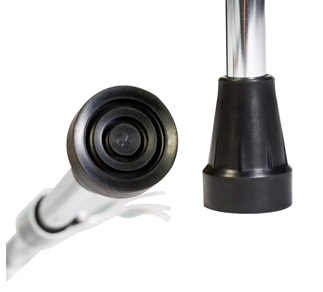
If you are in need of a walking aid, your physical therapist will first determine which is the right one for you. They will assess your needs and determine whether a cane or a walker is the best choice for your needs. Once this is decided, there are a few tips you should keep in mind to make sure your are using your cane properly. First, your cane should always be the height of your wrists when your arms are at your sides. This is a helpful way to check that you have your cane set at the proper height for your body. If you are using a walker, keep in mind that you should never have to bend forward at the waist to reach it, and if you do this may be a sign that your walker is set at the wrong height. Lastly, always check the rubber tips at the bottom of the cane or walker that you are using. If the rubber tips look uneven or are worn through, make sure to replace them. These rubber tips are there for your safety and to make sure you do not slip and fall.
Screen Shot 2015-06-29 at 2.14.26 PM.png


Canes and walkers are there to be your aid and they should never be the cause of further injury. If you are using a cane it is important to make sure it is the proper fit for your body and that it stays in the best condition possible. Be sure to consult your physical therapist prior to using a cane to make sure you are using the right cane for you!


If you are advised by a doctor or physical therapist to use a cane it is important to make sure that the one you buy is the perfect fit for you. When buying a cane, if you do not buy one to meet your specific needs you can further hurt yourself. It is important to find a cane that is the right fit for you so that you will be safe and comfortable when using it.
After being advised to use a cane, you should consult a physical therapist so that you can be properly fitted. By getting properly fitted, you will be able to avoid any fall-related injuries. A recent study has show that 47,000 senior citizens have ended up in the emergency room due to falls from using the wrong walking aid, such as walkers or canes. With such a high number of falls and such a great risk of injury, physical therapists urge that you get fitted for a cane prior to using one. One of the biggest factors that leads to improper cane usage, is that many people borrow canes or walkers from family and friends. This is unsafe because not everyone is the same height or has the same needs when it comes to a walking aids.  If you do not have the proper cane you can experience discomfort when using the cane and risk further injury.
 
If you are in need of a walking aid, your physical therapist will first determine which is the right one for you. They will assess your needs and determine whether a cane or a walker is the best choice for your needs. Once this is decided, there are a few tips you should keep in mind to make sure your are using your cane properly. First, your cane should always be the height of your wrists when your arms are at your sides. This is a helpful way to check that you have your cane set at the proper height for your body. If you are using a walker, keep in mind that you should never have to bend forward at the waist to reach it, and if you do this may be a sign that your walker is set at the wrong height. Lastly, always check the rubber tips at the bottom of the cane or walker that you are using. If the rubber tips look uneven or are worn through, make sure to replace them. These rubber tips are there for your safety and to make sure you do not slip and fall.
Canes and walkers are there to be your aid and they should never be the cause of further injury. If you are using a cane it is important to make sure it is the proper fit for your body and that it stays in the best condition possible. Be sure to consult your physical therapist prior to using a cane to make sure you are using the right cane for you!
- See more at: http://accessptw.com/blog/Choosing-the-Proper-Cane~1445.html#sthash.9lqmFwp8.dpuf
If you are advised by a doctor or physical therapist to use a cane it is important to make sure that the one you buy is the perfect fit for you. When buying a cane, if you do not buy one to meet your specific needs you can further hurt yourself. It is important to find a cane that is the right fit for you so that you will be safe and comfortable when using it.
After being advised to use a cane, you should consult a physical therapist so that you can be properly fitted. By getting properly fitted, you will be able to avoid any fall-related injuries. A recent study has show that 47,000 senior citizens have ended up in the emergency room due to falls from using the wrong walking aid, such as walkers or canes. With such a high number of falls and such a great risk of injury, physical therapists urge that you get fitted for a cane prior to using one. One of the biggest factors that leads to improper cane usage, is that many people borrow canes or walkers from family and friends. This is unsafe because not everyone is the same height or has the same needs when it comes to a walking aids.  If you do not have the proper cane you can experience discomfort when using the cane and risk further injury.
 
If you are in need of a walking aid, your physical therapist will first determine which is the right one for you. They will assess your needs and determine whether a cane or a walker is the best choice for your needs. Once this is decided, there are a few tips you should keep in mind to make sure your are using your cane properly. First, your cane should always be the height of your wrists when your arms are at your sides. This is a helpful way to check that you have your cane set at the proper height for your body. If you are using a walker, keep in mind that you should never have to bend forward at the waist to reach it, and if you do this may be a sign that your walker is set at the wrong height. Lastly, always check the rubber tips at the bottom of the cane or walker that you are using. If the rubber tips look uneven or are worn through, make sure to replace them. These rubber tips are there for your safety and to make sure you do not slip and fall.
Canes and walkers are there to be your aid and they should never be the cause of further injury. If you are using a cane it is important to make sure it is the proper fit for your body and that it stays in the best condition possible. Be sure to consult your physical therapist prior to using a cane to make sure you are using the right cane for you!
- See more at: http://accessptw.com/blog/Choosing-the-Proper-Cane~1445.html#sthash.9lqmFwp8.dpuf

Thursday, June 25, 2015

How to Preserve Bones and Joints

    As your body ages, bones, and joints begin to feel the impact of your increasing age. The deterioration of your bones and joints can lead to people being susceptible to major injury from falling and other contact. There are numerous ways to keep your bones and joints healthy and preserve the longevity of your joints.

    Key criteria that leads to the decline of bones and joints are aging, weight gain, and poor diet, mixed with minimal exercise. Though all of these are important, it all starts with a nutrition rich diet. As an adult probably told you when you were younger, “An apple a day keeps the doctor away.” While this statement isn’t entirely true, it’s a good motto to think of when beginning healthy eating habits. A calcium rich diet can strengthen bones and leave them at a lesser risk of injury in the long run.  Although it isn’t exactly a facet in a diet, (or considered a food) supplements can actually have a profound impact on your health. If you can’t find or don’t like the taste of foods with certain vitamins or minerals, these supplements can replace them and deliver the desired nutrients to your body.

    Joint and bone deterioration isn’t guaranteed amongst everyone but it is important to keep them active to prolong it. You don't have to be a world class athlete to keep active and help your body. Often low-impact physical activity is the best way to give joints and bones the exercise they need to stay healthy. For individuals already experiencing pain in both areas, walking just a half hour a day can relieve pain and build strength. Water aerobics is also an excellent form of exercise because it creates very little stress on your body.

    Exercise coupled with a healthy diet can greatly increase the durability of bones and joints. Both are vital to mobility and should be tended to throughout life. More attention given to these areas will lead to more freedom for your body as it ages.
As your body ages, bones, and joints begin to feel the impact of your increasing age. - See more at: http://accessptw.com/blog/How-to-Preserve-Bones-and-Joints~1409.html#sthash.BE4HvoAN.dpuf
As your body ages, bones, and joints begin to feel the impact of your increasing age. - See more at: http://accessptw.com/blog/How-to-Preserve-Bones-and-Joints~1409.html#sthash.BE4HvoAN.dpufvv
As your body ages, bones, and joints begin to feel the impact of your increasing age. - See more at: http://accessptw.com/blog/How-to-Preserve-Bones-and-Joints~1409.html#sthash.BE4HvoAN.dpuf
As your body ages, bones, and joints begin to feel the impact of your increasing age. - See more at: http://accessptw.com/blog/How-to-Preserve-Bones-and-Joints~1409.html#sthash.BE4HvoAN.dpufv
As your body ages, bones, and joints begin to feel the impact of your increasing age. - See more at: http://accessptw.com/blog/How-to-Preserve-Bones-and-Joints~1409.html#sthash.BE4HvoAN.dpuf

Common Injuries of the Shoulder

Common Injuries Of The Shoulder

    The shoulder is one of the most important parts of our body, as we rely on it to carry out many activities. It is made up of several joints that are connected to tendons and muscles. Since the shoulder has a wide range of motion, it is the most flexible and mobile joint in the body; However, this makes it very unstable and can be easily injured. Shoulder injuries can be caused by athletic activities, like throwing and weightlifting, as well as everyday activities such as gardening and pushing a lawn mower. There are a variety of shoulder injuries and understanding them is important in helping keep your shoulder healthy and pain-free.

One common injury of the shoulder is: dislocation. Dislocation happens when the ball in the upper arm comes out of the socket and can be caused by a hard pull or twist on the shoulder. Shoulder dislocations can be partial, with the ball only partially coming out, or complete, with the ball popping out entirely. If your shoulder is dislocated once, it can occur repeatedly because the ligaments, tendons, and muscles become loose. Recurring dislocations can cause pain when you lift or move your arm.

Another common injury is shoulder separation, which occurs when ligaments between the shoulder blade and collarbone are torn. This can happen when you fall with an outstretched hand or suffer a hard blow to the shoulder. Often, a bump forms on the top of the shoulder and causes severe pain and decreased shoulder movement.

Rotator cuff injuries are another common injury to the shoulder. Tendinitis in the rotator cuff occurs when tendons become inflamed from being pinched by surrounding shoulder parts. Bursitis happens when the bursa - a tiny, fluid-filled sac - becomes inflamed. Both Bursitis and Tendinitis can occur from overusing the shoulder and make any shoulder movements extremely painful. Aging, long-term wear and tear, or sudden injury can even lead to tears in rotator cuff tendons. Torn rotator cuffs can lead to tenderness and soreness in the shoulder. If your tendon is completely ruptured, you won’t even be able to move your arm at all.

Shoulder pain can also result from arthritis. Osteoarthritis, the most common type of Arthritis, happens from wear and tear of the shoulder cartilage. It usually develops slowly over time and causes swelling, pain, and stiffness.

Fractures are also another common injury in shoulders and usually occur on the collarbone, shoulder blade, and humerus (upper arm bone). Fractures often occur from a blow to the shoulder or a fall and can lead to pain, swelling, and bruising of the shoulder.

To prevent these injuries, you can catch symptoms beforehand and see a physical therapist. Some symptoms would include a popping sound in your shoulder from movement. If you feel as though your shoulder is slipping or moving during activity, you should see a physical therapist immediately. Physical therapists play an important role in preventing injuries like these to the shoulder. There are certain protocols for physical therapists to go through on strengthening the muscles and tendons in the shoulder.

Shoulder injuries are very common and can happen to anyone doing any type of activity that involves the shoulder. If you are feeling intense and severe pain in your shoulder, you should seek out medical attention immediately. For less severe pain, it is best to rest your shoulder for a few days and if the symptoms linger, you should see a doctor.

How to Preserve Bones and Joints

http://accessptw.com/blog/How-to-Preserve-Bones-and-Joints~1409.html